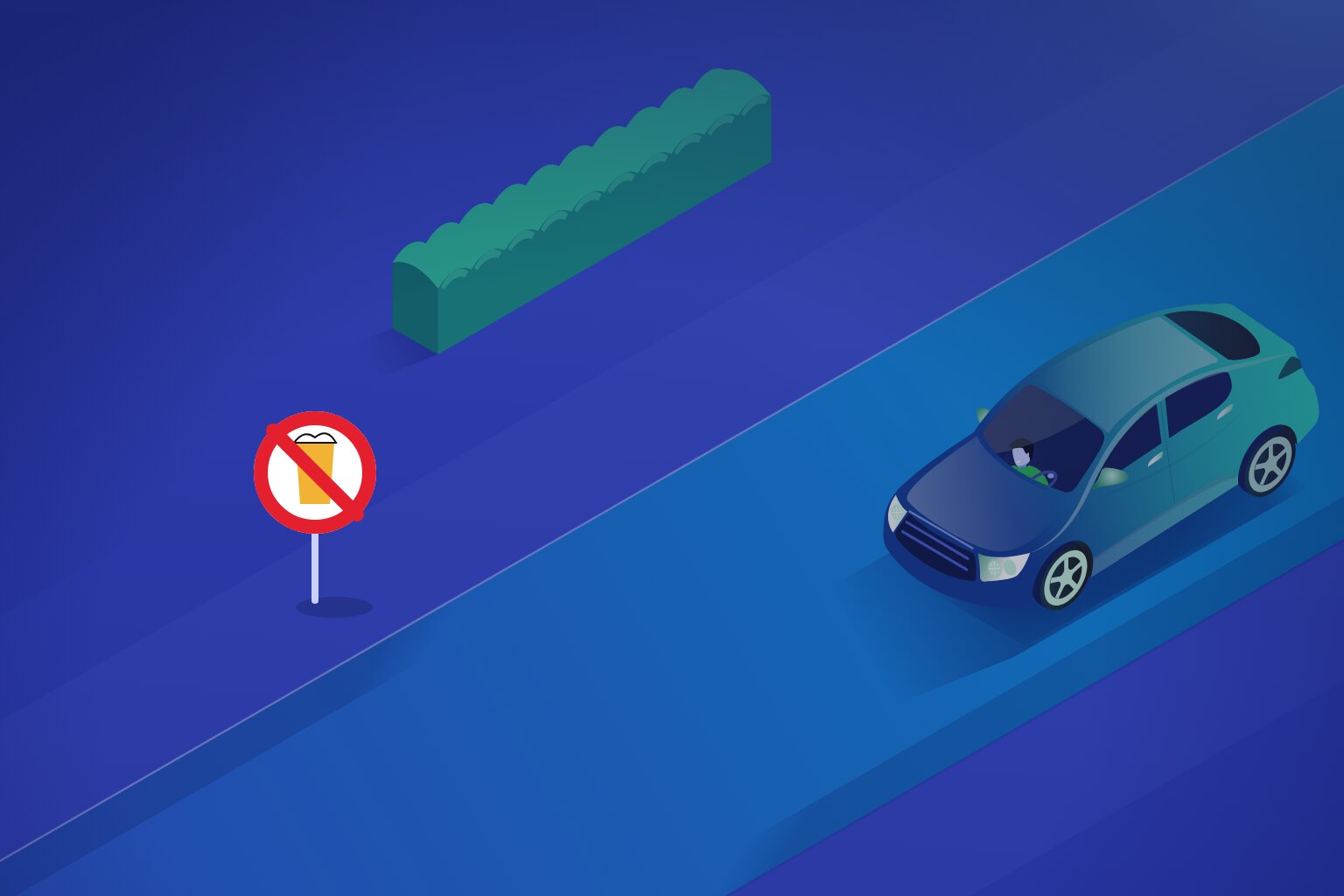


You absolutely mustn’t use your front or rear fog lights unless visibility is seriously reduced. They can dazzle other road users and block their view of your brake lights. When things get clearer, you absolutely must switch them off.
Fog lights at a glance
| Situation | What to do | How strict |
|---|---|---|
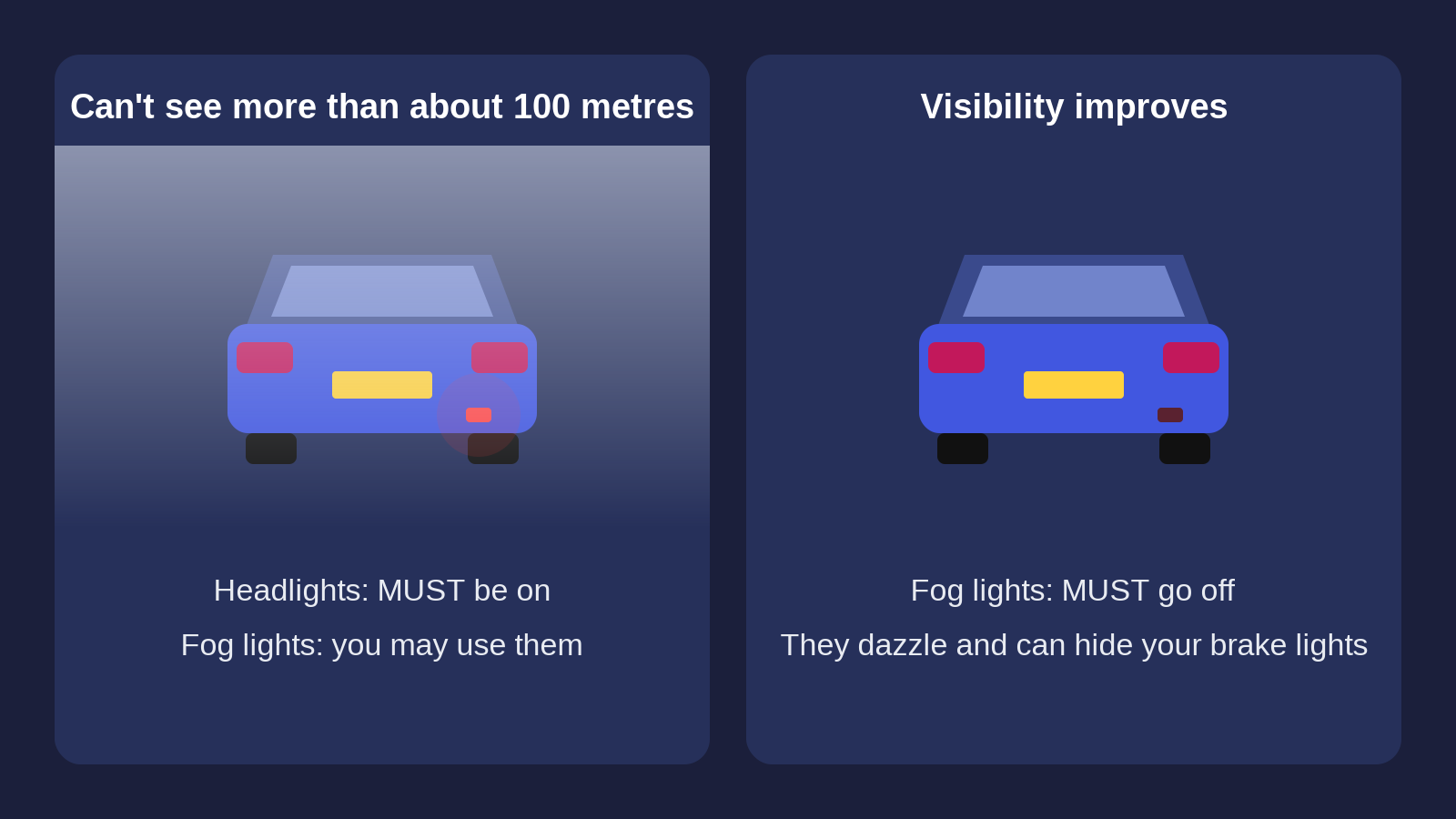
| Visibility seriously reduced (generally under 100 metres) | Headlights on; fog lights allowed | MUST (headlights), may (fog lights) |
| Visibility improves | Fog lights off | MUST |
| Dull daytime weather | Dipped headlights, or dim-dip if fitted | should |
| Stopped on the roadside | Engine, headlights and fog lights off | MUST |
| Parked on the road in fog (only if unavoidable) | Parking lights or sidelights on | advice |
What seriously reduced visibility means
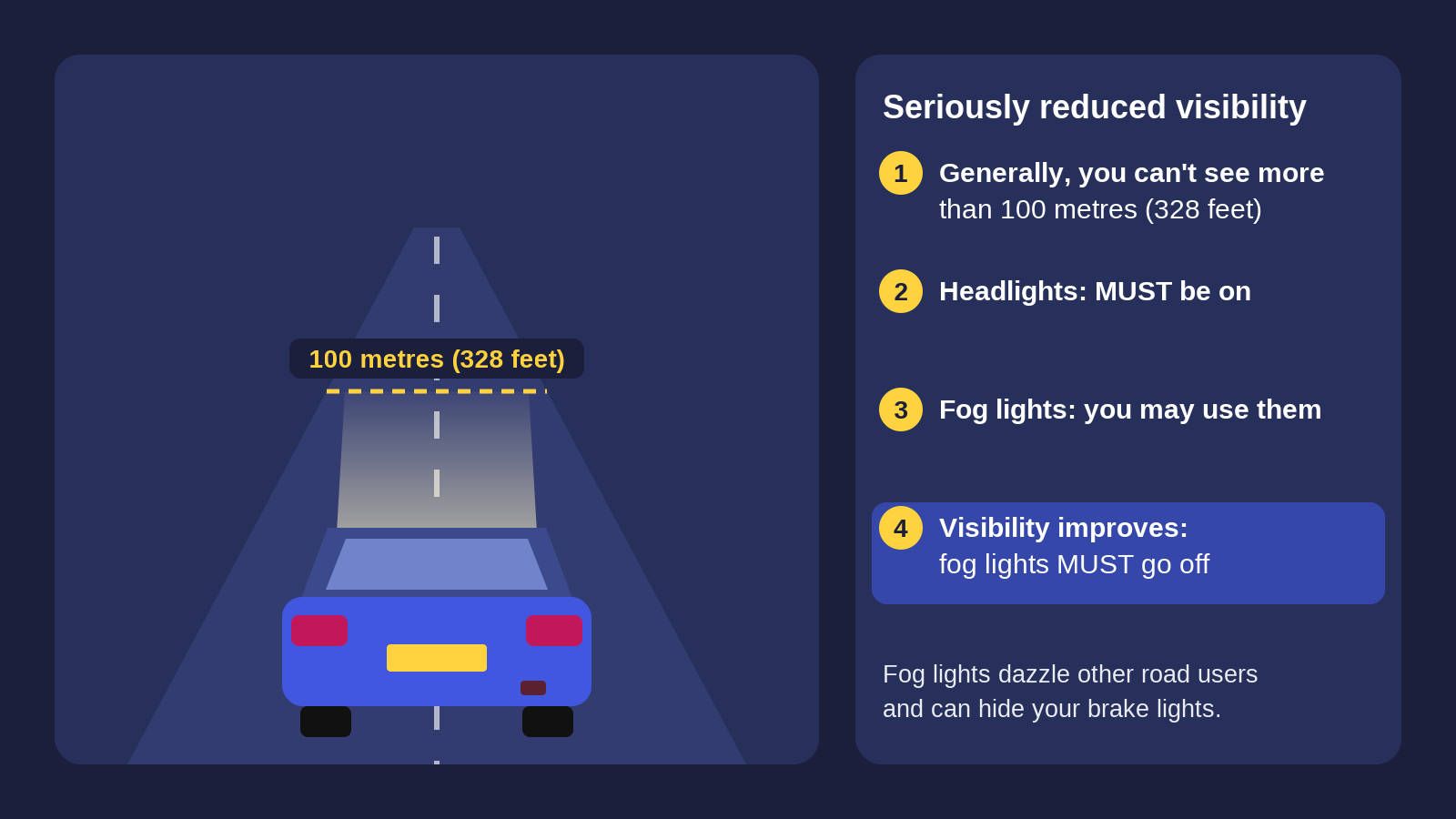
When it comes to using headlights, you need to do that when visibility is seriously reduced. That means “generally when you cannot see for more than 100 metres (328 feet)”. You may use front or rear fog lights too, but make sure to turn them off as soon as the visibility improves. The guidance says “generally”, so treat that distance as a guide only.
Why the rules are so strict
The law’s pretty clear on this: you mustn’t use your lights in a way that will dazzle or cause discomfort to anyone else, whether they're driving, cycling, or even riding a horse.
Front and rear fog lights
The law states you mustn’t use your front fog lamps in a way that causes dazzling. The same applies to rear fog lamps. They mustn’t dazzle another driver following behind. There's no distance given within the regulations themselves. A front fog lamp illuminates the road ahead, while a rear one makes you more visible from behind. Front lights are a steady white, rears are red.
Headlights first, fog lights second
Always use your headlights when visibility is seriously reduced. Fog lights are an extra. The Code says “You may also use” them. At night, you need to have headlights on, unless there's lit street lighting. And during dull weather in the daytime, you should use dipped headlights, or dim-dip if that’s fitted; it makes sure people can see you.
What the law says
The Road Vehicles Lighting Regulations 1989 clearly explain this. They cover England, Wales and Scotland. Highway Code rules with “must” or “must not” are legal requirements. Breaking them is a criminal offence.
Before you reach the fog
Before you drive, learn how your lights work, including any automatic ones. If "Fog" appears on a sign but the road looks clear, be prepared for a bank of fog or patchy fog ahead. Even if it seems to be fading, you could suddenly find yourself in thick fog. Check your mirrors and slow down before any visibility issues arise.
Driving in fog
When driving in fog, use your lights as needed and keep a safe distance behind the car in front. Rear lights can mislead you. Make sure you’re able to stop well within the distance you can clearly see ahead, especially on motorways and dual carriageways because cars are moving faster. Use your windscreen wipers and demisters; other drivers might not use their headlights, so be aware of them. Don't speed up just to pull away from a car that's too close behind. Fog lights can hide your brake lights.
Switch them off when it clears
You MUST switch off fog lights as soon as the visibility improves. The Highway Code says front and rear fog lights are for times when visibility is seriously reduced.
Mistakes to avoid
You mustn't use fog lights without your headlights. It is also against government guidance to drive in low light conditions using only daytime running lamps.
Parking in fog
If you need to stop by the side of the road, you MUST switch off the engine, headlights and fog lights. It's especially dangerous to park on the road in foggy conditions, so try to avoid it; if not possible, leave your parking lights or sidelights on.
A worked example
Imagine this: you’re driving at night on a country road with no streetlights and fog thickens until you can only see 100 metres. You MUST use your headlights, and you may consider adding your fog lights too. When the fog lifts and you can see further than 100 metres again, remember to switch off those fog lights; it’s a MUST.
Quick quiz
- The Highway Code says visibility is seriously reduced generally when you cannot see more than how far?
- Why must you switch fog lights off when visibility improves?
- Visibility is seriously reduced. Which lights MUST you use?
- You can't avoid parking on the road in fog. Which lights should you leave on?
Answers, in order: 100 metres (328 feet); they dazzle other road users and can hide your brake lights; headlights, with fog lights your choice; and parking lights or sidelights.
Questions people ask
When should you use fog lights?
Only switch them on when visibility is seriously reduced. The Highway Code says that’s generally when you can't see for more than 100 metres, or about 328 feet. You must have your headlights switched on already if you’re using fog lights, and must turn the fog lights off again as soon as things improve.
Is it illegal to drive with fog lights on?
It is against the law to use them when visibility isn't seriously reduced, or if they cause undue dazzle. It's a 'must not' rule, which means breaking it is a criminal offence. None of the official pages I checked gives a fine or penalty points for this particular rule.
What is the difference between front and rear fog lights?
Front fog lamps help you see the road ahead; rear fog lights make your vehicle more visible to others behind you. Front ones shine steady white light, while rears shine steady red. Be aware that using rear ones can hide your brake lights.
Does my car need a rear fog light for its MOT?
Cars first used on or after 1 April 1980 must have a rear fog light fitted to the centre or offside, unless they have no front and rear position lamps. A missing one, or one that doesn't work, will mean your car fails the test; the same goes if the warning light doesn't work correctly. If your car was first used before 1 March 2018, front fog lamps won't be checked during an MOT. Fog lights aren't needed on tricycles or quadricycles either.
Will I be asked about fog lights on my driving test?
Yes, you might be asked about them. It’s one of the ‘tell me’ questions, “Tell me how you'd switch on the rear fog light(s) and explain when you'd use it/them”. You need to show that you know how to operate the switch, check the warning light comes on and explain in simple terms when they should be used. Getting it wrong gives you 1 driving fault, a minor.
Sources
The Highway Code, rules 226 to 237, rules 103 to 158, rules 238 to 252 and the introduction, Minimising headlight glare and its effects, MOT inspection manual, section 4 and Car show me, tell me vehicle safety questions (GOV.UK), and The Road Vehicles Lighting Regulations 1989, regulation 27 (legislation.gov.uk). Contains public sector information licensed under the Open Government Licence v3.0.